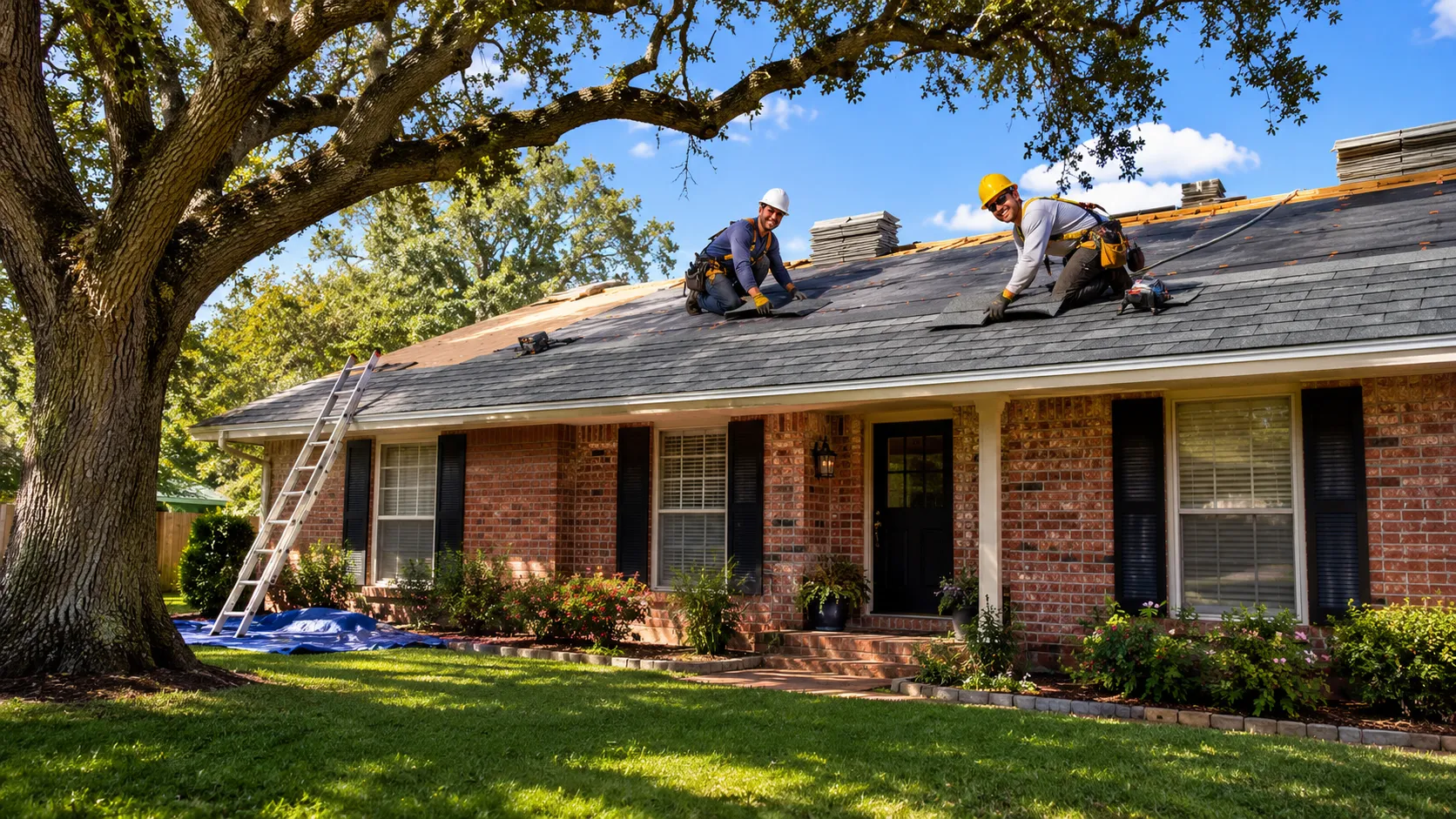
A roof is a bit like a pair of shoes worn every day in all weather. It rarely fails overnight. It wears a little each season. A simple calendar helps you notice that wear while a plan is still easy to make.
This guide is about watching your roof, not repairing it. Biloxi Roof Replacement refers new roofs and full replacements only. This service does not refer small repairs. Stay on the ground, since wet or sun-heated shingles are slippery and hot. Binoculars and a phone camera do the job safely.
Late winter to early spring: the gentle look-over
Winters on the gulf coast are mild, with only rare hard cold snaps. That makes this a calm time for a walk-around, much like a spring-cleaning tour of the house.
- Walk the yard and look for missing, curled or cracked shingles.
- Check the gutters for heavy piles of shingle grit.
- Look at ceilings inside for new stains or discoloration.
- Note any tree limbs that touch or hang over the roof.
- Take dated photos from the same spots each year.
Those photos are the real value. Next year, you can compare them and see change instead of guessing.
Late spring: get ready for storm season
Think of boarding up before a long trip. You do the small chores early so the big event is less stressful. Tropical storm season brings strong wind and heavy downpours, so this is the time to trim branches back from the roof and clear gutters and downspouts so water leaves quickly. From the ground, look at the metal flashing around vents and chimneys. Make sure nothing is blocking attic vents. Keep a folder with the roof's age, any paperwork and your photos.
Call (228) 289-2010
Summer: heat and humidity
A car parked in the sun all afternoon gets hot inside. Attics on slab-on-grade ranch homes do the same, and the heat cooks the roof from underneath. Humidity adds dark streaks of algae on shingles. Streaks are mostly cosmetic, but they show where moisture lingers.
If you go into the attic, choose a cool, calm morning and keep it short. Look for a musty smell, damp insulation, or daylight showing through the boards. After any summer storm, scan the yard and roofline for debris and displaced shingles.
Fall: the check-up after storm season
After a long drive, you check the car. After storm season, check the roof the same way. Walk the property for shingle pieces. Look along the roofline for sags, dents or lifted edges. Inspect gutters and downspouts for dents that hail can leave. Check ceilings for fresh stains. If a big storm has passed, write down the date and take photos before anything is moved. Photos with dates are useful if you later talk to your insurer or a provider. Ask your insurer directly about your own policy, because this site cannot answer that.
Winter: plan ahead, not in a rush
Planning a household budget goes better in a calm month than during an emergency. The same is true for a roof. Several signs suggest it is time to think about a full replacement:
- Shingles curling, cracking or bare in patches.
- Leaks or stains showing up in more than one place.
- A sagging or wavy roofline.
- Heavy shingle grit collecting in gutters.
- A roof near the end of the expected life of its material, which the manufacturer's information can show.
Older pier-and-beam houses may also deserve a closer look at the framing before any new roof goes on. Planning early gives you time to compare providers, ask good questions and pick a material suited to hot attics and heavy rain.
When to move from watching to asking
Watching is useful, but it does not fix anything. If your notes show a pattern, such as repeated stains, worn patches across the roof or hail marks, the next step is a conversation with a provider about a full replacement. Call (228) 289-2010 to reach an independent local provider. Availability depends on the provider and on your part of the Biloxi area.
Call (228) 289-2010
More homeowner guides